How to Select Surgical Sutures That Optimize Patient Outcomes
Choosing the right surgical sutures can profoundly affect patient outcomes and overall surgical success. It is essential to have clear, comprehensive guidance on selecting sutures that align perfectly with your surgical objectives.
From the fundamental choice between absorbable and non-absorbable options to the complexities of needle geometry and tensile strength retention, each decision plays a crucial role. This detailed post will outline key factors to consider and highlight Atramat’s extensive portfolio, meticulously crafted for consistent performance and strict compliance with ISO 13485, FDA, and CE standards. Atramat's commitment to excellence ensures that you have a reliable partner in achieving superior surgical results. Continue reading to not only enhance your suture selection skills but also improve wound healing outcomes in your practice with informed, strategic decisions supported by Atramat’s industry-leading products.
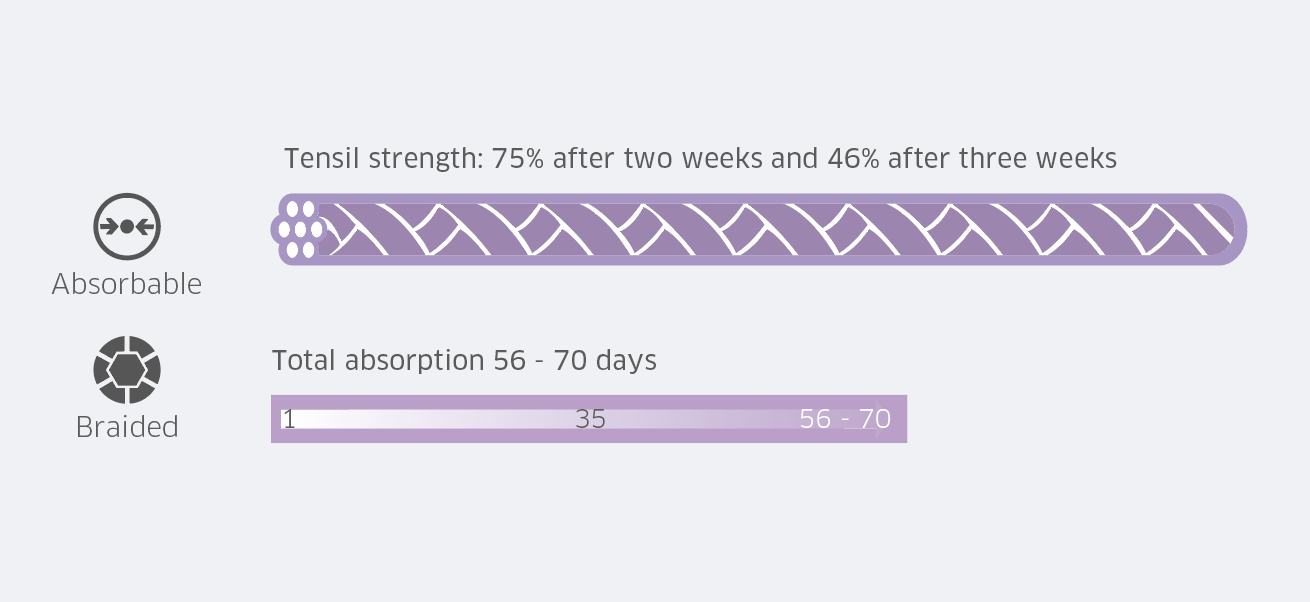
When beginning suture selection, your primary decision is between absorbable and non-absorbable options. Absorbable sutures, such as those made from polyglycolic acid, naturally decompose in the body over time and are particularly ideal for internal tissues where removing sutures is challenging, if not impossible. A comprehensive study from ScienceDirect highlights their optimal use in surgeries where long-term support is not required, emphasizing their convenience and effectiveness in various internal procedures. Atramat’s absorbable sutures offer reliable performance even in the most delicate scenarios.
Conversely, non-absorbable sutures, made from durable materials like silk or polypropylene, remain intact and require removal once the healing process is complete. They are considered optimal for skin closure and various other external uses. Atramat’s non-absorbable sutures provide excellent durability, meeting the demands of numerous surgical applications with precision. For those seeking detailed, in-depth information on the myriad of suture types, their specific characteristics, and diverse applications, this resource provides invaluable guidance.

Additionally, the choice between monofilament and braided sutures can significantly affect your handling experience and tissue reaction. Monofilament sutures, composed of a single strand, reduce infection risk due to their smooth surface, making them particularly suitable for procedures where minimizing tissue drag is critical. Atramat’s monofilament options ensure a neat, clean interaction with tissues, causing lower tissue trauma.
On the other hand, braided sutures provide enhanced knot security due to their complex multi-strand design, making them especially suitable for securely holding tissues under tension. Atramat’s braided sutures are designed for high-performance scenarios, balancing strength and reliability. However, because of their texture, they may harbor bacteria, necessitating careful evaluation of the surgical context and sterilization protocols to mitigate potential infection risks.
Preventing infection remains a paramount concern. Antibacterial sutures, often coated with triclosan, are an effective strategy for reducing the risk of surgical site infections. Integrating Atramat’s antibacterial sutures into your practice can significantly enhance patient safety and improve clinical outcomes. Research consistently indicates that these advanced sutures can substantially lower infection rates, making them a valuable asset in surgical procedures.
Knot security is vital for maintaining wound stability throughout the healing process. Sutures must remain secure under tension to prevent wound dehiscence. Tensile strength retention indicates how long a suture maintains its holding power post-implantation. Atramat sutures are engineered to retain superior strength, ensuring tissues remain properly approximated during the most critical healing phases. Some sutures are designed to retain up to 70% of their strength a week after placement, providing exceptional support.
A robust understanding of these properties helps surgeons avoid suture failure and ensures reliable, secure wound closure. It is crucial to consider the surgical site and expected healing duration when weighing these factors. Atramat’s tailored solutions deliver the right balance of properties for successful outcomes.
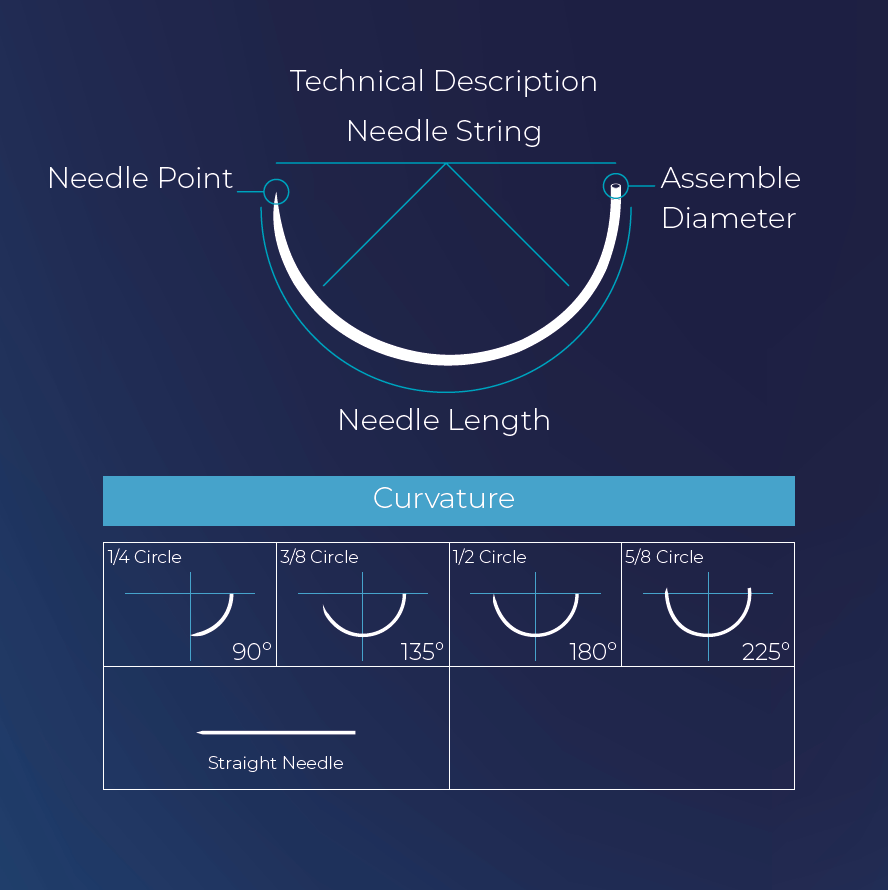
Needle design also plays a critical role in precision and tissue interaction. A taper needle is well-suited for delicate tissues, allowing smooth, atraumatic passage without cutting, while a reverse cutting needle excels in tougher tissues with its specialized cutting edge, enhancing penetration efficiency while minimizing tissue trauma. Atramat’s needles are crafted for precise performance, enhancing surgical control.
Handling characteristics are equally important. Sutures should glide smoothly through tissue, allowing for easy, secure knot tying while maintaining control. Always match the needle choice to the tissue type to minimize trauma and enhance surgical efficiency, thereby optimizing patient outcomes. Atramat ensures that its sutures meet these handling requirements seamlessly.
Sutures come in various sizes, each tailored for specific tasks. USP suture sizes serve as a reliable guide in selecting the appropriate thickness for the task at hand. Atramat’s extensive range of suture sizes ensures you have the flexibility to choose the right suture for every procedure. Thicker sutures are recommended for providing strength in demanding tasks, such as orthopedic repairs, while finer sizes are best suited for delicate surgeries.
Understanding suture sizes and their practical applications helps tailor your choice to the specific procedure, thereby promoting optimal healing and minimizing complications. This knowledge empowers you to make well-informed decisions that enhance patient recovery, ensuring surgical success. Atramat’s offerings give you the confidence to achieve the best possible outcomes.
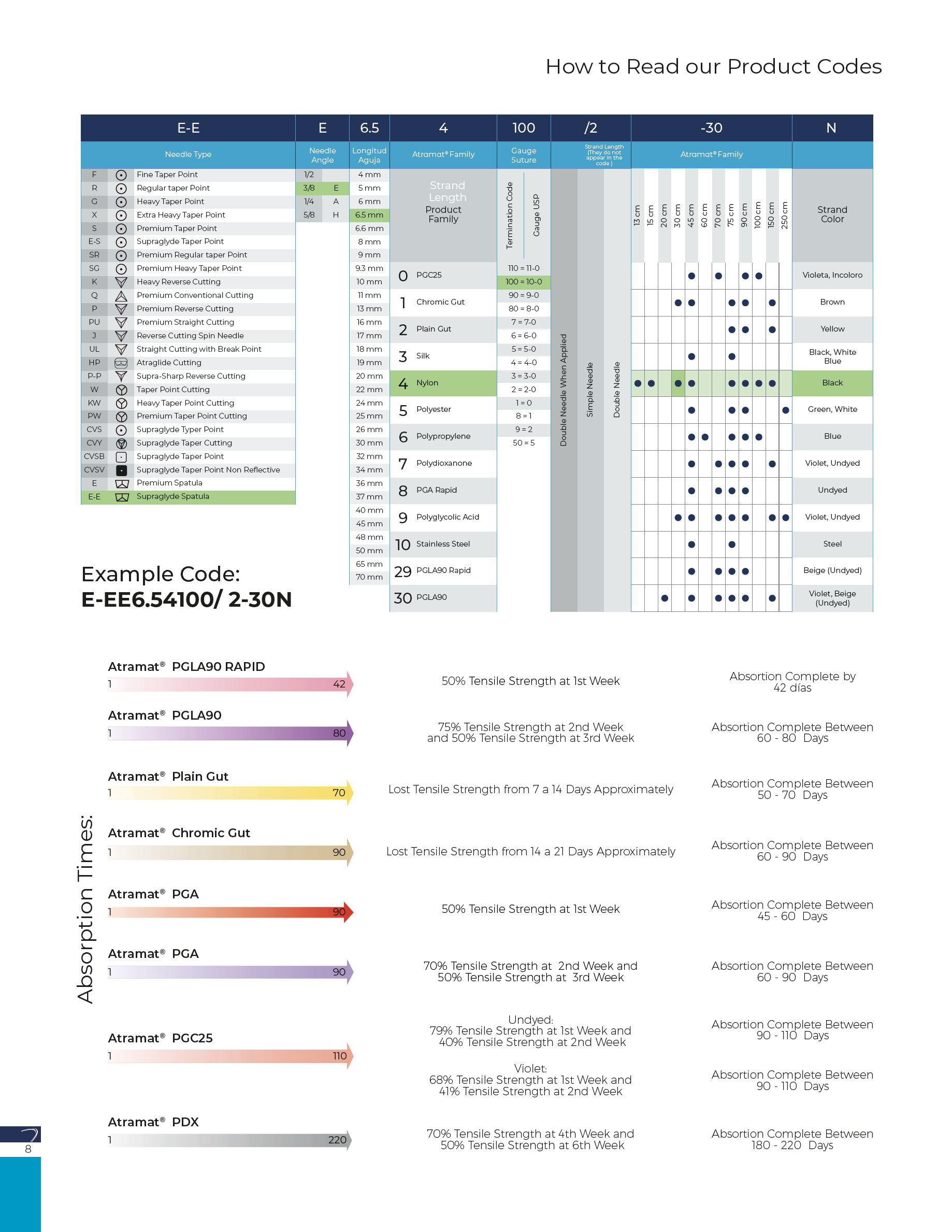
By thoroughly considering these factors and deepening your understanding of suture properties, you can make well-informed decisions that significantly enhance patient recovery. Atramat’s extensive portfolio supports quality outcomes, rigorously complying with global standards to ensure reliability and excellence in every surgical procedure.